Stonewall Survey Finds Trans People Pessimistic on Equality
Prepared with editorial partners
Stonewall's chief executive is trying to lower the temperature of the trans debate in Britain. His charity's new survey shows how much is at stake: many trans people expect less acceptance, not more.
A charity that had to rebuild
Simon Blake is a former Stonewall trustee who worked on the equal marriage and age of consent campaigns. He came back in 2024 to an organisation in crisis. Whitehall departments, the BBC and others dropped its workplace diversity scheme, a key source of income, after criticism of its tactics and the soundness of its legal advice.
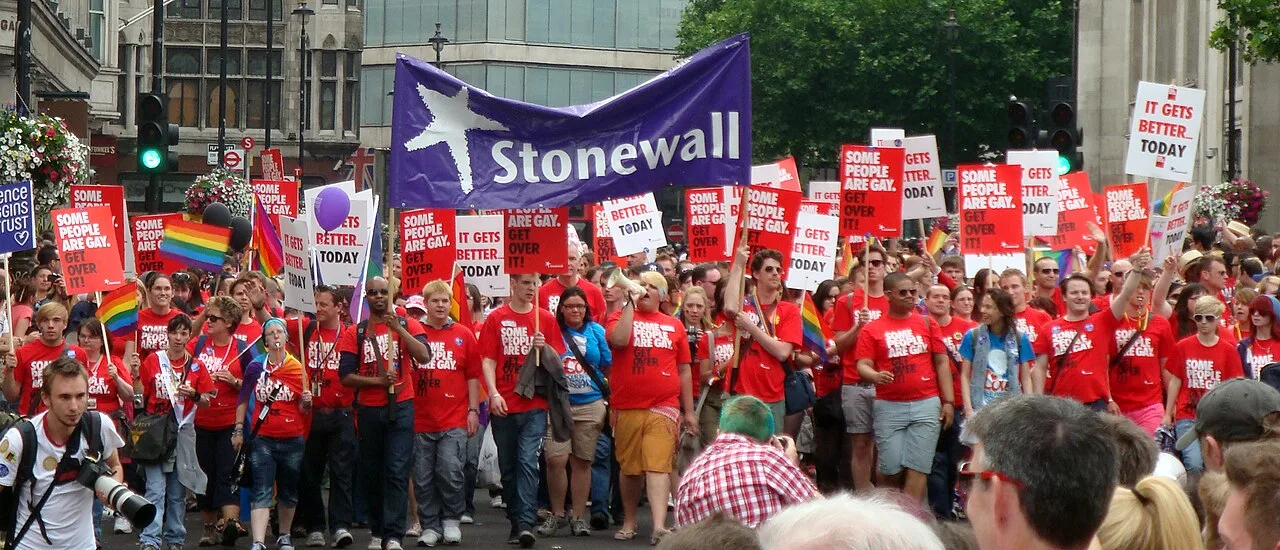
To win back public trust, he turned to the charity's early years. Ian McKellen, who co-founded Stonewall in 1989, and other veterans have spoken to staff about how Stonewall won people over when attitudes were hostile. "Progress takes time," Blake said of the new strategy.
He describes it as a mix of courage and pragmatism. Sometimes it means pushing quickly, and sometimes it means seeing that there is a first step. The aim is to air real disagreements without vitriol, as Stonewall did in the equal marriage and age of consent debates.
The ruling and its readings
Last year's UK supreme court ruling held that sex in law means biological sex. Gender-critical campaigners had argued that letting trans people into single-sex spaces such as changing rooms and prisons put women at risk. They welcomed the verdict as vindication.
They see it as a clarification of what the Equality Act always meant, not a rollback. In their view it let women keep toilets, changing rooms, wards and sports single-sex without defending every exclusion individually. They also say trans people's uncertainty partly reflects organisations, Stonewall among them, having wrongly read the law as saying something else.
Blake says Stonewall is not trying to overturn the decision. "We understand that this is the law," he said. He points out that discrimination on grounds of gender reassignment is still illegal, and that the judges said their ruling should not be seen as one side winning a culture war.
His request is to government and watchdogs: understand the impact, and act where it does harm. He cites warnings that some trans people may stay away from hospital under new NHS guidance telling them to use wards matching their birth sex.
Fewer feel accepted, more stay away
The survey is the first major analysis since the ruling. Almost half of British LGBTQ+ people feel more accepted than a decade ago. For trans+ people it runs the other way: 58% feel less accepted, and 75% of trans women.
Fear is changing behaviour. Almost half of trans+ people now stay away from some bars and restaurants because they feel unsafe there. 37% steer clear of single-sex spaces, including toilets and changing rooms, and 29% skip exercise classes or sports teams.
Blake says the gloom comes from guidance that affects trans people's ability to take part in public life, their access to treatment when unwell and their use of work toilets they have used for 10 years. Out for a drink with friends, he said, his companions were frightened by something as simple as a trip to the toilet. Over one weekend, he said, three people told him they were close to leaving the country, which they see as hostile.
Looking ahead, 80% are pessimistic about the future of equality. When the same question was asked in 2017, the net answer was hope.
The survey also reports that 22% of LGB and 32% of trans respondents have attempted suicide at some point. It is due to be published on Monday.
Blake's own account
Blake, 52, says growing up gay in the 1990s was "terrifying". It is one reason the planned ban on conversion practices matters to him. Parliament is examining it, and it is trans-inclusive. To him it says that you do not need to be changed.
He links the trans community's gloom to a change in climate. A decade ago, he argues, people knew less about trans and non-binary issues and the topic was not yet part of a long culture war. That war, he says, left trans people feeling dehumanised.
Asked whether the old "no debate" stance was counter-productive, he answered that trans people had been told to join the conversation and then found it too hard to take part. Everybody needs to be able to ask questions, he said, but without heat.
That may sound optimistic while Reform-led councils take down rainbow flags and scrap diversity training. He points instead to trade unions that stepped in with money for a local Pride event after Durham county council defunded it.
Our view
Stonewall's pitch rests on a narrow bet: accept the legal outcome, and argue about its consequences. Whether it works depends on whether government agrees to measure the ruling's impact at all, since Blake's request is addressed to ministers and watchdogs, not to the courts.
The survey gives that request a baseline. A later round of the same questions would show whether the 80% pessimism figure moves.
Source: The Guardian