Tesla to Spend €3B on Berlin Plant for Cybercab Output
Brought to you in partnership with
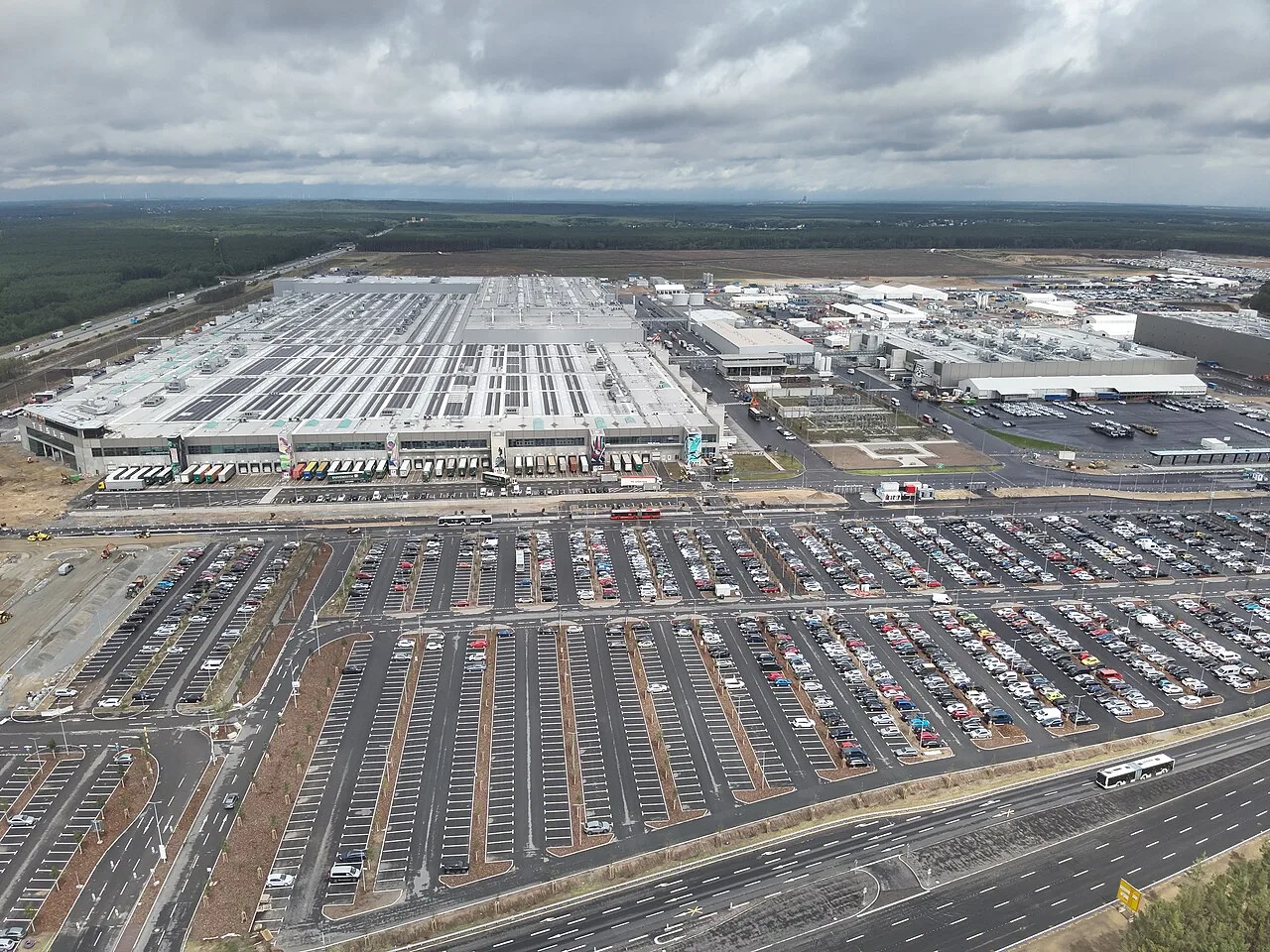
Tesla is putting €3 billion ($3.3 billion) into its factory near Berlin so it can build the Cybercab, its two-seat autonomous vehicle, in Europe. It is a large commitment to a product that has been on the road for only about two months.
What Tesla says it will build in Grünheide
The company announced the plan on Monday. Production of Cybercabs at the site is meant to start in 2029. André Thierig, Tesla's senior director of manufacturing for the plant, wrote on LinkedIn that the new building will be able to make up to 1 million vehicles a year.
Construction should begin in the first half of 2027. Thierig added that the expansion will turn it into Tesla's most technologically advanced plant.
The Cybercab has no steering wheel and no pedals. It was first shown in 2024 and launched publicly in September.
A company moving away from the driver's seat
TechCrunch reports that Tesla is pushing more resources into the Cybercab as part of its aim to be an AI and robotics company rather than only a carmaker. Tesla has said the Cybertruck will end next year, partly so its Austin, Texas, plant can build Cybercabs instead.
Demand for the Model 3 and Model Y has stayed strong even as U.S. sales slipped. Tesla delivered more than 486,000 vehicles in the third quarter, about 6,000 more than in the second. European sales are rising as electric cars gain ground there.
Elon Musk, by contrast, does not see much of a future for cars that people drive themselves. He wants Tesla to move toward systems that need no human attention. The current driver-assistance product, Full Self-Driving (Supervised), still does.
Cameras only, and a cautious rollout
Tesla's self-driving approach differs from Waymo's. Tesla's system depends on cameras alone, with no lidar. That copies human sight, yet a model with too little training can misjudge scenes that extra sensors might make clearer.
Tesla has kept the Cybercab rollout cautious: the cars cannot drive late at night, and the company is trying to lengthen their hours. Over the two-plus months of service, none of them has been in a major incident.
That record seems to have given Tesla the confidence to commit to larger production. Tesla has about 1,307 robotaxis registered in Texas, mostly modified Model Y cars working in several cities of the state. About 573 Cybercabs are on the roads in Austin, with Dallas coming soon.
Federal regulators are investigating Tesla's self-certification of the Cybercab. The vehicle lacks a steering wheel, pedals and other traditional equipment, some of which federal safety standards require.
Source: TechCrunch