Haemanthus, Billy Evans' Startup, Has Patents but No Product
Your daily brief on leadership and business
Haemanthus, an Austin-based startup run by Billy Evans, says it can use lasers to detect disease in blood, saliva and urine. It reportedly raised as much as $20 million and holds at least one granted patent. Publicly, it has no product customers can buy and no published data showing the technology works. It has also lost its chief technology officer.
Evans is the longtime partner of convicted Theranos founder Elizabeth Holmes. Interest in his company surged after A24 released "You Can See Everything," a documentary by Nathan Fielder and Lance Oppenheim about the couple, on Oct. 16.
What the company says it built
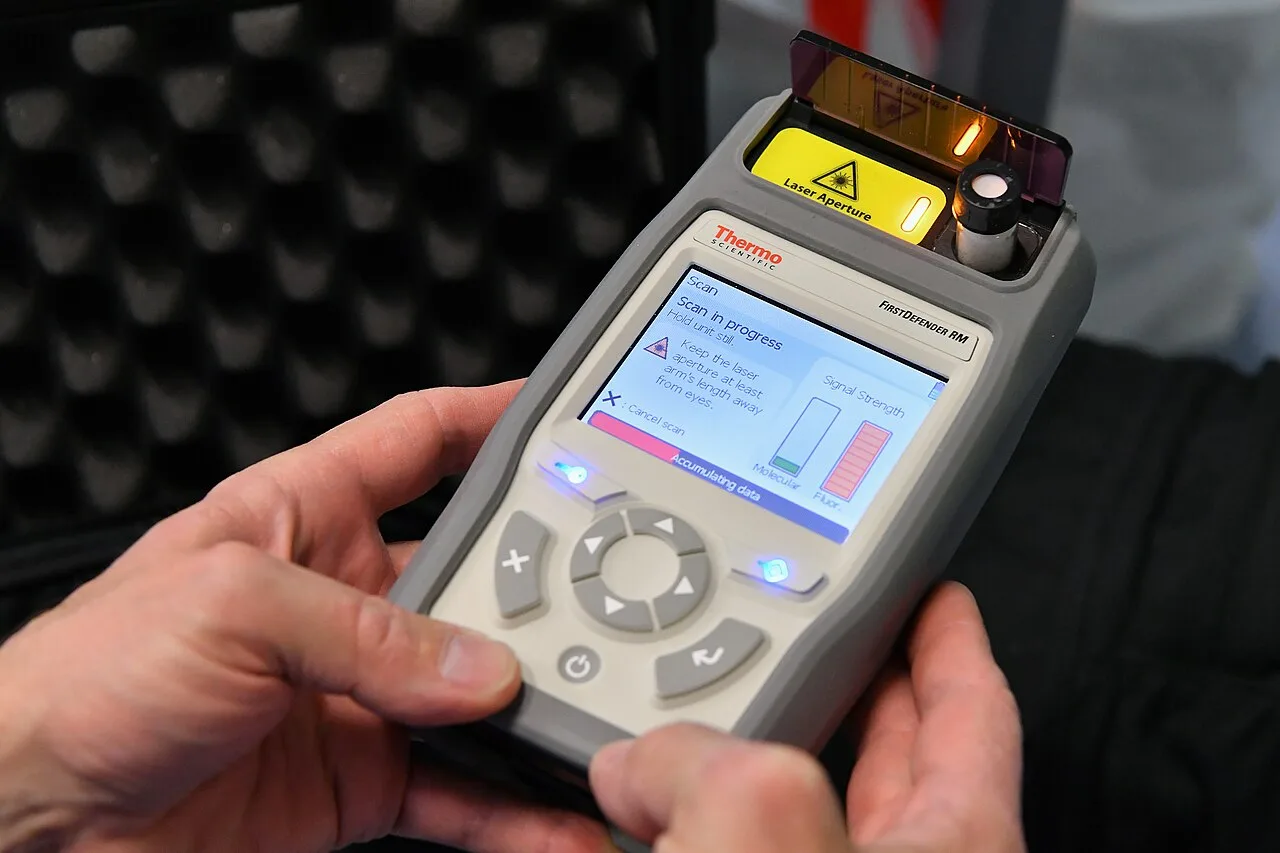
Evans, 34, has listed himself as CEO since October 2022. Marketing materials reviewed by The New York Times last year said the device scans biological samples "on a molecular level" with a laser, identifies markers such as glucose and hormones within seconds, and uses AI to detect cancer and infections.
Evans graduated from MIT in 2015 with a degree in economics. According to Forbes, he worked from 2017 until January 2019 as a special projects manager at Luminar Technologies, a lidar startup building sensors for self-driving cars. Luminar filed for Chapter 11 bankruptcy in December 2025. Evans Hotels, the San Diego family company founded by his grandparents, said in an Oct. 1 statement that he is neither an employee nor a shareholder.
The underlying technique, Raman spectroscopy, is established. Forensic investigators use handheld devices to identify suspected drugs. Blood is harder: the molecules researchers want are present in tiny amounts, and other components can produce stronger signals that drown them out, according to a review in Applied Spectroscopy.
Haemanthus has framed its approach as different from Theranos, which tried to miniaturize existing lab tests. A Raman patent granted in January 2025 names two inventors, one of them former CTO Joseph LaChapelle. A patent does not show that a test can diagnose patients.
Money, departures and the film
The company plans to start with veterinary testing before human applications. That market is far less regulated: the FDA does not require premarket approval for devices intended for animals, though it can act against misbranded or adulterated products.
LaChapelle told Forbes he resigned on March 16, 2026, citing a conflict of interest with a stealth startup he founded earlier. Evans reportedly told someone he had let the CTO go. Evans did not respond to Forbes' request for comment.
In the film, Evans tells Fielder, "The idea is to put the band back together and do it all again." A source close to Evans told New York Magazine that the project shown was separate from Haemanthus. The company has said Holmes has "no role, now or future."
Source: Fortune